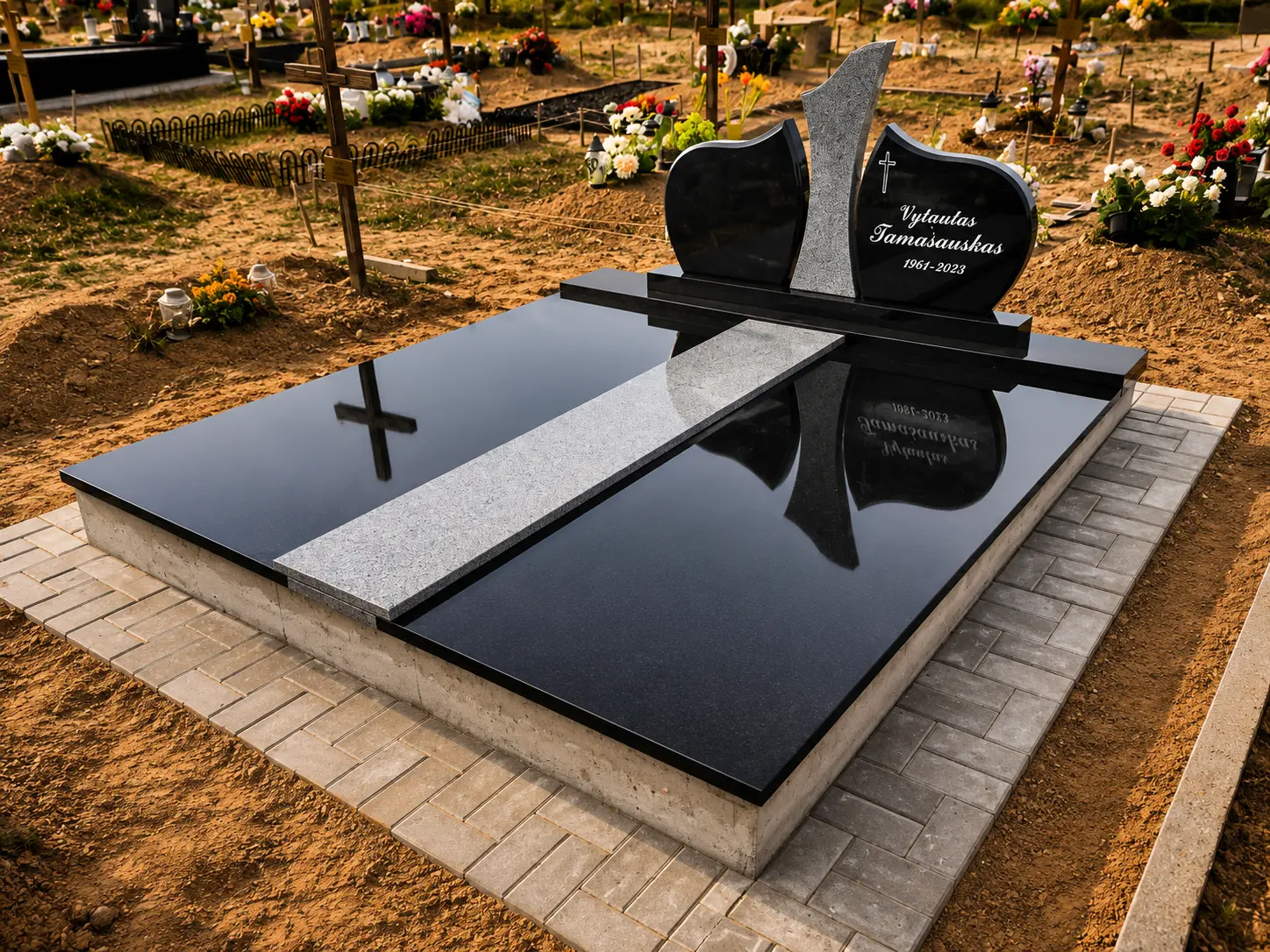
1. Record the place and its constraints
Note the grave measurements, level, path height and neighbouring monuments. Cemetery administrations may set requirements for dimensions, bases or installation, so clarify these before production.
- Photographs from several angles
- Approximate length, width and level changes
- Cemetery location and known requirements
2. Decide how much care is realistic
Full slabs reduce weeding but need a stable base and correct falls. Chippings or a small planting area feel softer but require occasional renewal. Choose for the real pattern of care.
- Full covering: orderly and lower maintenance
- Mixed solution: softer and more adaptable
- Open soil: more seasonal care
3. Build a clear hierarchy
The memorial should be neither visually slight nor too heavy for the grave. Its silhouette, horizontal slabs and accents need one clear axis. Decoration earns its place only when it supports the memorial character.
- One primary silhouette
- One dominant granite
- Enough quiet space for names and dates
4. Review inscriptions before production
The final layout must contain exact names, dates, punctuation and symbols. Judge it at the real monument scale and normal viewing distance, not only on a screen.
- Approve exact spelling
- Allow for a possible future inscription
- Prefer legibility over a merely decorative typeface